Warren Buffett’s 25/5 Rule: How to Focus on What Matters Most
The most dangerous distractions are not the things you dislike. They are the good things that are not quite important enough. Here is how the 25/5 rule helps you see them.
 Đoàn Nguyên Hiệp
5 min read
I have learned a lot from Warren Buffett and Charlie Munger, and not only about money.
What impresses me most is not how many things they did. It is how many things they refused to do. They said no to most investments, most trends and most opportunities, and put their energy into a small number of decisions they understood well.
One popular story about Buffett turns that idea into a simple exercise. People call it the 25/5 rule or the two-list strategy. I have used it in business, in training and in my personal life, and it has changed how I think about focus.
Here is the story, why it works, and how to use it this week.
The story behind the 25/5 rule
As the story goes, Buffett’s longtime pilot, Mike Flint, asked him for advice about his career. Buffett told him to do three things:
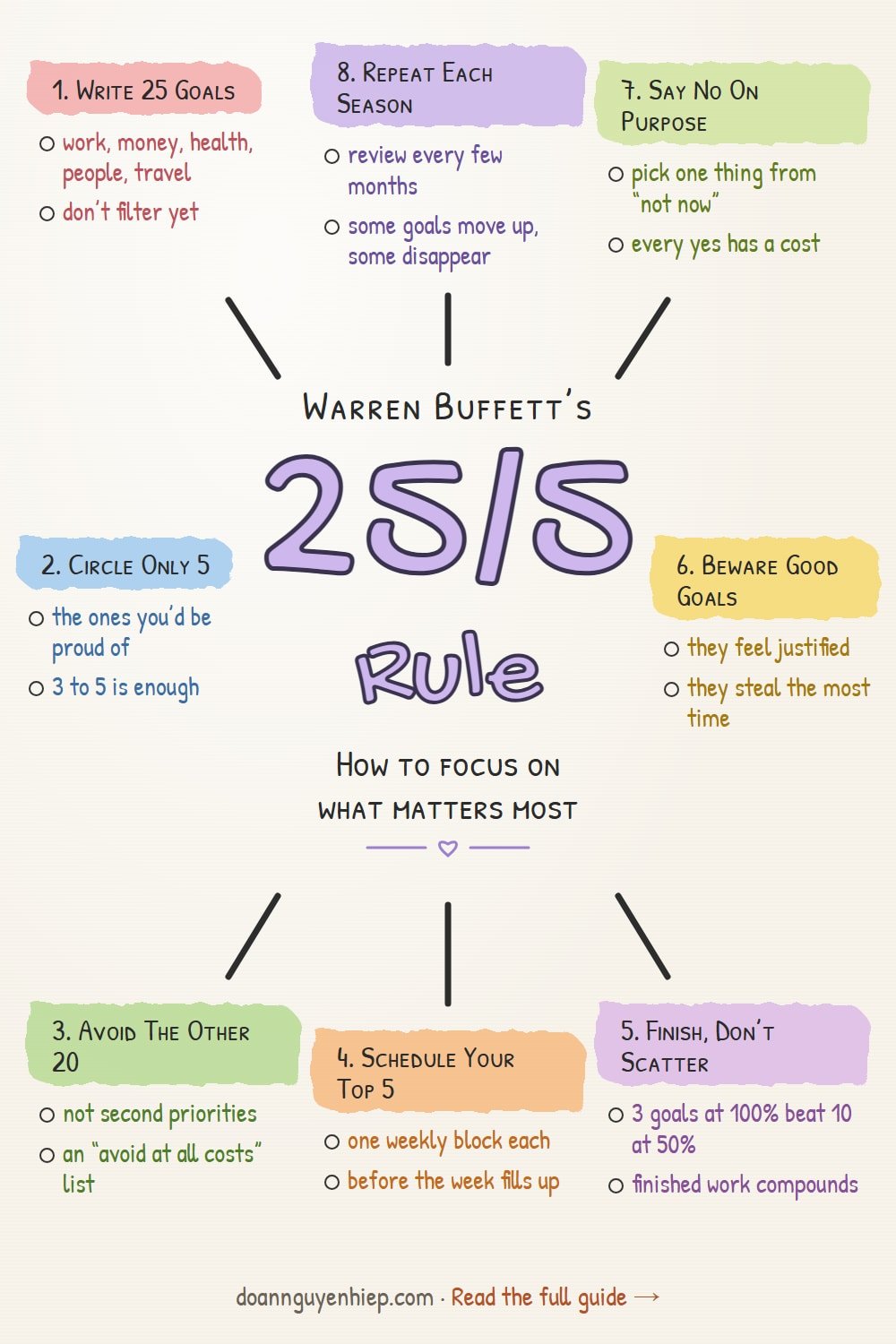
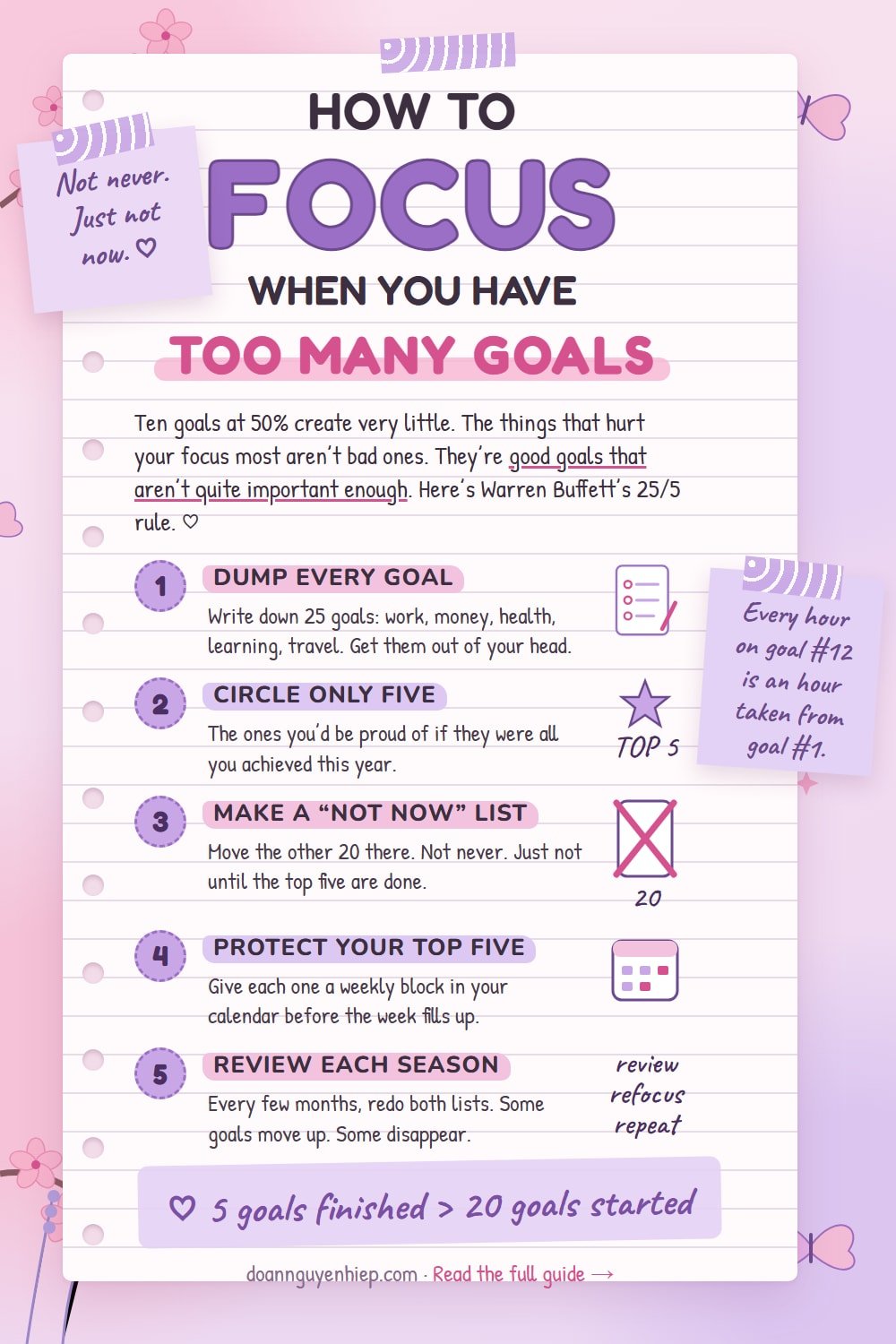
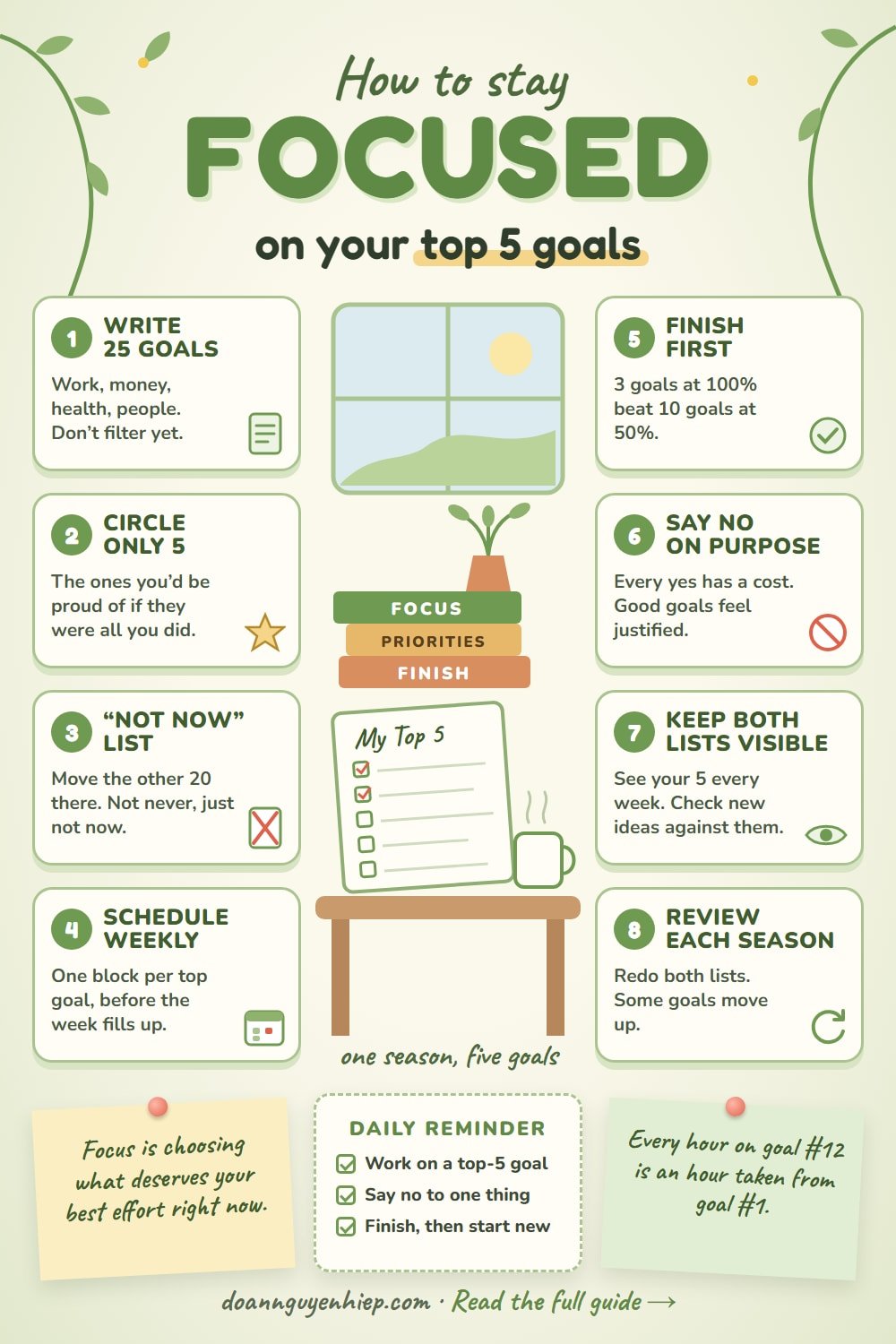
- Write down your top 25 goals.
- Circle the 5 that matter most.
- Look at the other 20. These are not your second priorities. They are your “avoid at all costs” list. Give them no attention until the top 5 are done.
To be honest, this story has been passed from person to person, and I have never seen Buffett confirm it himself. So I don’t treat it as history. I treat it as a useful tool. Whether or not the conversation happened exactly this way, the lesson matches how Buffett and Munger have always worked: a few big things, done with full attention.
Why good goals are the real danger
Most people can easily ignore things they don’t care about. Nobody needs a system to avoid a task they hate.
The real problem is the goals you do care about. Learning a new language. Starting a side project. Getting better at photography. Training for one more race. Each one is good. Each one feels justified. And together, they quietly take the time and energy your most important goals need.
The things that hurt your focus most are not bad. They are good, just not good enough.
That is why so many people have ten projects at 50% instead of three projects at 100%. Half-finished projects create very little. Finished ones compound.
1. Write down your 25
Start by getting everything out of your head. Write down every goal, project or ambition you have for the next year or two: work, money, health, learning, relationships, travel.
Don’t filter yet. The point is to see everything in one place. Most people are surprised by how long the list gets, and that surprise is useful. It explains why they feel busy but scattered.
2. Circle only 5
Now choose the five that matter most. This is uncomfortable, and it should be. A few questions help:
- If I achieved only these five this year, would I be proud of the year?
- Which goals would make many of the others easier or unnecessary?
- Which goals fit the person I want to become, not just the person I was?
Five is not a magic number. Some people circle three. The rule is simply that the list must be short enough that each item gets real attention every week.
3. Treat the other 20 as an avoid list
This is the step most people skip. They circle five goals, then keep working on the other twenty “when they have time.” But there is never extra time. Every hour you give to goal number 12 is an hour taken from goal number 1.
Economists call this opportunity cost: every choice has a cost, measured by the best alternative you give up. The 20 uncircled goals are not free. They are paid for with your top five.
So make the second list visible. Write it down. When one of those goals tempts you, read the list and remember: not now. Not never. Just not until the important work is done.
4. Repeat it every season
Endurance athletes plan their year around one or two main races. Everything else in the season supports those races or waits until later. You cannot peak for ten events in one year.
Your goals work the same way. The 25/5 rule is not a decision for your whole life. It is a decision for a season, maybe three months, maybe a year. When a top goal is finished, or when life changes, do the exercise again. Some goals from the avoid list will move up. Others will disappear, and you will be glad you never started them.
Focus is not about doing everything well. It is about choosing what deserves your best effort right now.
If you are not sure yet which goals deserve to be in your top five, start with How to Decide What to Focus On (and Get to Simple). And to protect your top five in your calendar every week, use the ideas in 4 Time Management Tips That Actually Work.
Do the 25/5 exercise this week
It takes about 30 minutes:
- Write down 25 goals for the next year or two. Don’t filter.
- Circle 5. Ask which ones you would be proud of if they were the only ones you achieved.
- Copy the other 20 to a separate list and title it “Not now.”
- Schedule the top 5. Give each one a weekly block in your calendar.
- Say no to one thing from the “Not now” list this week, on purpose.
Keep both lists somewhere you will see them. Review them every few months.
Frequently asked questions
What is Warren Buffett’s 25/5 rule?
It is a prioritization exercise: write down your top 25 goals, circle the 5 that matter most, and treat the other 20 as a list to avoid completely until the top 5 are done. It is also called the two-list strategy.
Did Warren Buffett really create the 25/5 rule?
The story is usually told through his former pilot, Mike Flint, and it has been passed along second-hand. It has not been confirmed by Buffett himself, so it is best treated as a useful exercise rather than a historical fact.
Why should I avoid the other 20 goals?
Because they are attractive enough to steal your time. Every hour spent on a secondary goal is an hour not spent on your most important ones. Avoiding them is temporary: they wait until the top 5 are finished.
How often should I redo the 25/5 exercise?
Whenever a top goal is finished or your situation changes, and at least once or twice a year. Think in seasons: choose your five for the next few months, then review.