How to Decide What to Focus On (and Get to Simple)
Everyone tells you to focus. Almost nobody tells you how to decide what to focus on. Here is the path I have learned: explore, measure, commit, and only then simplify.
 Đoàn Nguyên Hiệp
6 min read
When I started endurance training, I wanted to know everything.
I read about heart rate zones, carbon wheels, interval sessions, nutrition plans, recovery tools and training apps. Every week I found a new thing that promised to make me faster. I was busy, motivated and, honestly, a little lost.
It took years of training to see what actually mattered. Show up consistently. Do most of the work at an easy, steady effort. Sleep well. Eat enough. Stay healthy enough to keep going. That short list explains most of my progress. Almost everything else was noise.
Today, my training is simple. But I could not have started there. I had to earn that simplicity.
This is the part most advice about focus leaves out. Here is how I think about deciding what to focus on, in training, in business and in life.
Why “just focus” is incomplete advice
You have heard it many times: focus on one thing, remove distractions, go deep. It is good advice. I believe in it. In 4 Time Management Tips That Actually Work, I wrote about protecting your most important work before urgent things take over the day.
But there is a problem. Focus only helps once you know what deserves it. When you are new to something, you usually don’t know yet:
- Which skill matters most in a new job or business.
- Which habit will actually change your health or your finances.
- Which direction fits your strengths, your values and the life you want.
Telling a beginner to focus is like telling a new runner to “run your best pace.” True, but not helpful yet. First you have to find out what that pace is.
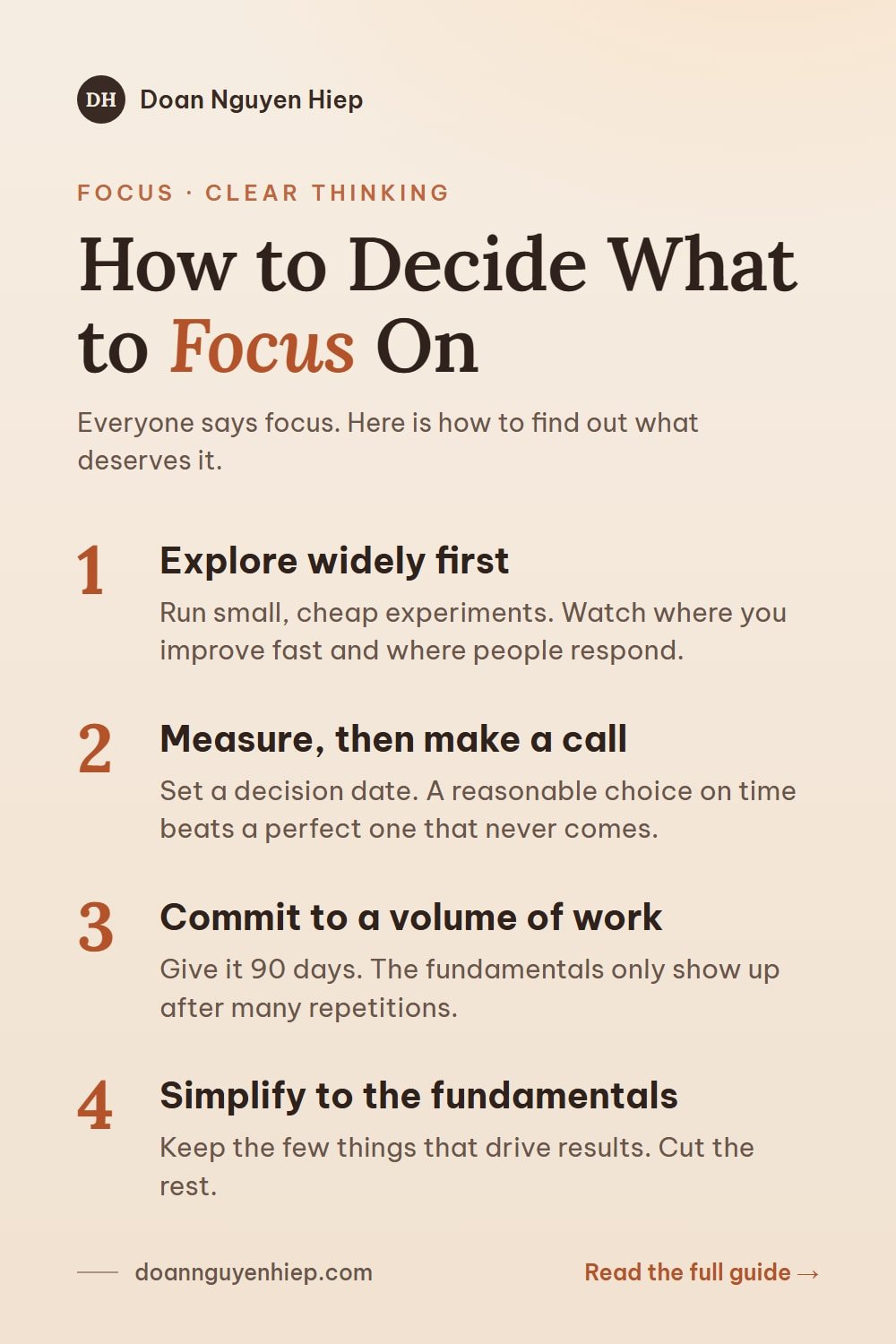
1. Explore widely before you narrow down
At the beginning, your job is not to focus. Your job is to search.
Try several things, but keep each try small and cheap. Write a few articles before you decide to build a blog. Run a small test offer before you build a whole business. Join a few group rides before you buy an expensive bike. Small experiments let you learn without betting everything.
While you explore, pay attention to two signals:
- Where you improve faster than expected. Some things come more easily to you than they do to others.
- Where people respond. Customers buy, readers reply, a coach notices your progress.
You don’t find what to focus on by thinking harder. You find it by trying things and watching what happens.
Exploring is not a lack of discipline. It is the first stage of it. Just remember that it is a stage, not a permanent way of living.
2. Measure, then make a call
Exploration only works if you learn from it, and you learn faster when you measure.
Keep it simple. In business, track which efforts bring in customers. In training, keep a log of your sessions and how you feel. With money, write down where it actually goes. Numbers protect you from remembering only what you want to remember.
Then comes the hard part: at some point, you have to decide. Nobody will tell you when you have collected enough information. There is no bell that rings. So set the deadline yourself:
“On [date], I will choose one direction and commit to it for the next [period].”
You will never have perfect information. Waiting for certainty usually means waiting forever. Choosing also has a cost: every yes is a no to other options. That is exactly why it matters. I wrote about this in the episode on the power of saying no.
A reasonable decision made on time is usually better than a perfect decision that never arrives.
3. Commit to a volume of work
Once you choose, the real learning begins. And it comes from repetition.
You only understand the fundamentals of something after you have done it many times. The first ten training sessions teach you very little. The first hundred start to show you patterns. After a thousand, you know what matters, because you have seen it work and fail again and again.
This stage is not exciting. It is often boring. That is normal. Most people quit here because the new thing is no longer new, and another shiny option appears. Protect yourself from that:
- Set a commitment period. For example, 90 days before you are allowed to switch.
- Use a minimum version for bad days, as I explained in How to Build Good Habits That Actually Stick.
- Track the work, not the mood. A simple calendar with an X for each day you showed up is enough.
Volume is where compounding starts. Small sessions, repeated for months, turn into skill.
4. Simplify to the fundamentals
After enough repetitions, something changes. You can see the few things that really drive results, and you notice how much of what you used to do was unnecessary.
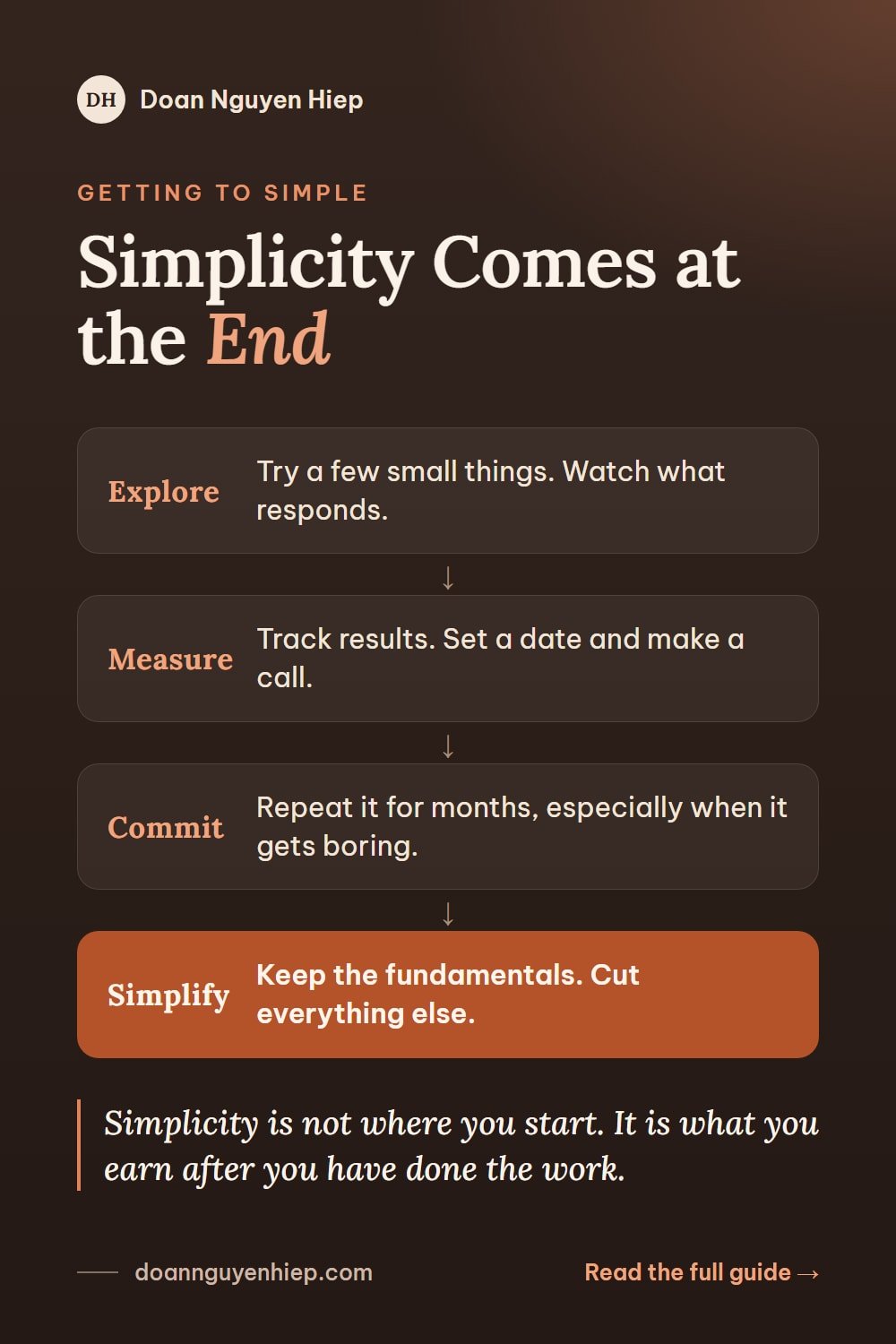
That is the moment to simplify. Not before.
The philosopher Blaise Pascal once apologized for writing a long letter, explaining that he had not had time to make it shorter. Simplicity takes work. The simple version comes at the end of the process, not at the beginning.
Here is what simplicity looks like in a few areas of my life:
- Training: consistency, mostly easy effort, enough sleep, enough food.
- Money: spend less than you earn, invest regularly, avoid mistakes that can ruin you.
- Business: make something people want, help them find it, keep costs under control.
Simplicity is not where you start. It is what you earn after you have done the work.
Once you know your fundamentals, protect them and remove the rest. Fewer tools, fewer apps, fewer projects, fewer meetings. The goal is not to do less for its own sake. It is to give your best attention to the few things that matter.
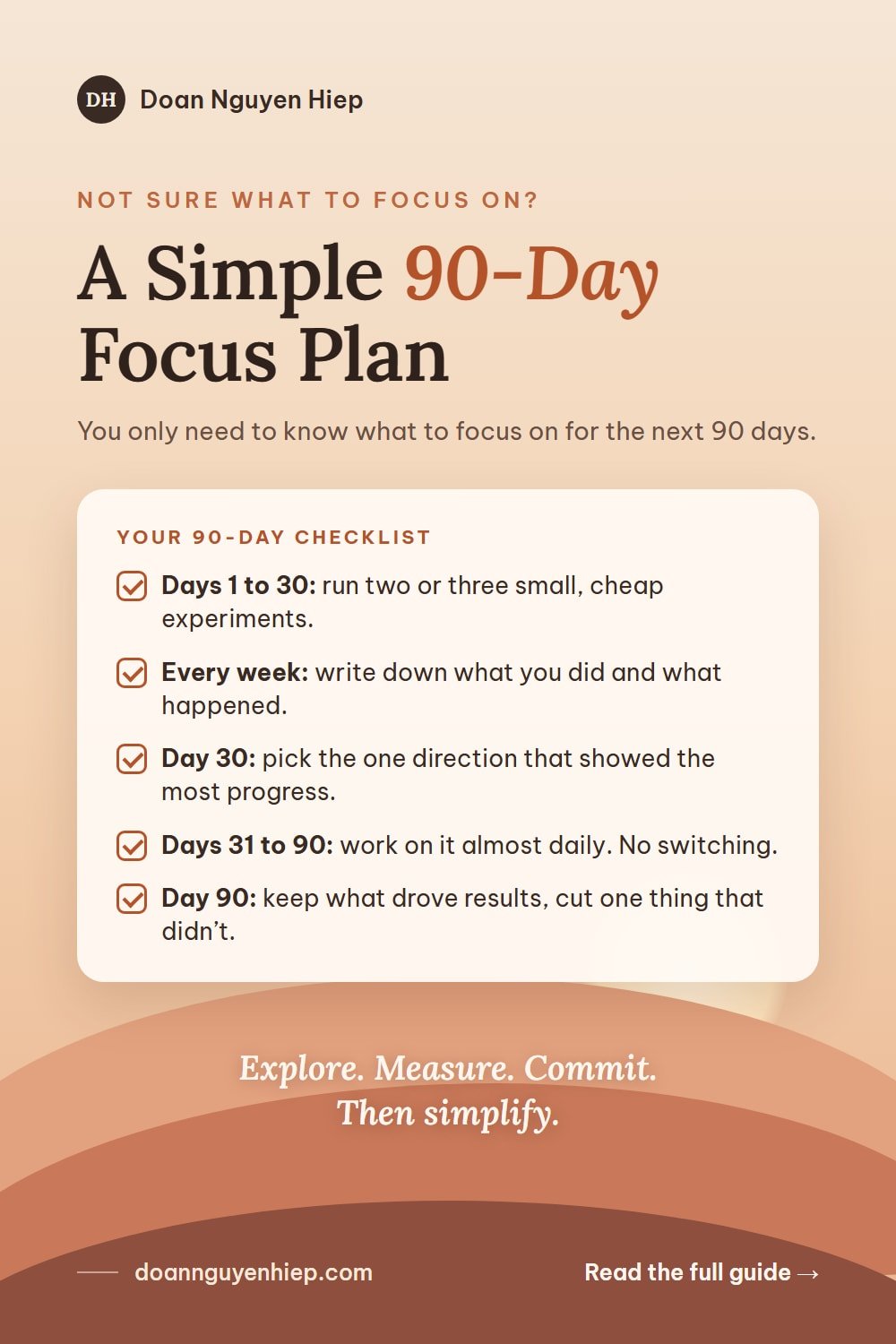
A simple 90-day focus plan
If you are not sure what to focus on right now, try this:
- Days 1 to 30, explore: choose two or three small experiments. Keep each one cheap and quick.
- Measure as you go: write down what you did and what happened, every week.
- Day 30, make a call: pick the one direction that showed the most progress or response. Write the decision down.
- Days 31 to 90, commit: work on it almost every day, with a minimum version for bad days. No switching.
- Day 90, simplify: list what actually drove your results. Keep those, and cut one thing that did not matter.
You don’t need to know your whole future today. You only need to know what to focus on for the next 90 days.
Frequently asked questions
How do I decide what to focus on?
Run a few small experiments, measure what happens, and set a date to decide. Choose the direction where you improved fastest or where people responded most, then commit to it for a fixed period before you judge it again.
How long should I try something before deciding?
Long enough to see real feedback, but not forever. For most personal projects, a few weeks of small experiments is enough to choose a direction, followed by two or three months of committed work before you evaluate it seriously.
What if I choose the wrong thing?
You will still learn faster than if you never chose. Skills, habits and discipline carry over to the next direction. Review your choice at the end of the commitment period, and change course if the evidence tells you to.
How do I stay focused once I have chosen?
Set a commitment period, protect a daily block of time for the work, use a small minimum version on bad days, and track whether you showed up. Expect the middle to feel boring; that is usually a sign you are doing the real work.